
Skip Navigation
An Education To Last a Lifetime

At FCA, your child receives an enduring education, one that is rich, time-tested, and deeply rooted, designed not merely to inform, but to form. Our aim is to cultivate wisdom and virtue in the heart of your child; what Saint Augustine described as the “right ordering of the affections” or simply learning to love what truly matters.

So we measure education by more than merely how much a student can recall. We ask…has the mind been strengthened? Have the heart and character been shaped? Has the whole person been prepared for faithful living, now and for the life to come?

In short, Christian classical education is the joyful passing on of what is True, Beautiful, and Good through teachers who love God's truth, cultivating virtue in students—body, heart, and mind—so they may grow in wisdom and faithful service to the Lord Jesus Christ.
The Many Differences

Humbly but confidently, a Christian classical education is distinct from a modern education in many ways. 

A modern education will teach your child that he is a cosmic accident and designed for productivity in this life.

A Christian classical education helps your child see who he is, created in God's image, and called to serve others and love God in this life and the life to come.

A modern education will mold your child's behavior using treats and rewards.

A Christian classical education will teach your child to face his shortcomings and persevere in the times of struggle.

A modern education will place a high priority on classroom “fun” and make continual adjustments to meet your child's interest with ease.

A Christian classical education holds your child to a high standard; teachers will challenge your child and draw him up to meet those challenges with confidence.

In a modern education, morality is untethered from any fixed foundation so your child is left to navigate right and wrong on their own.

In a Christian classical education, the Christian teacher does not merely instruct, but they model virtue, serving as faithful examples for your child.

A modern education trains your child to look for what can be done, drawing him to what is merely expedient and efficient.

A Christian classical education trains your child to understand what ought to be done, encouraging him to pursue what is right for its own sake, even if it is hard.

A modern education chases the newest methods and packaged content, relying on summarized, textbook-generated content.

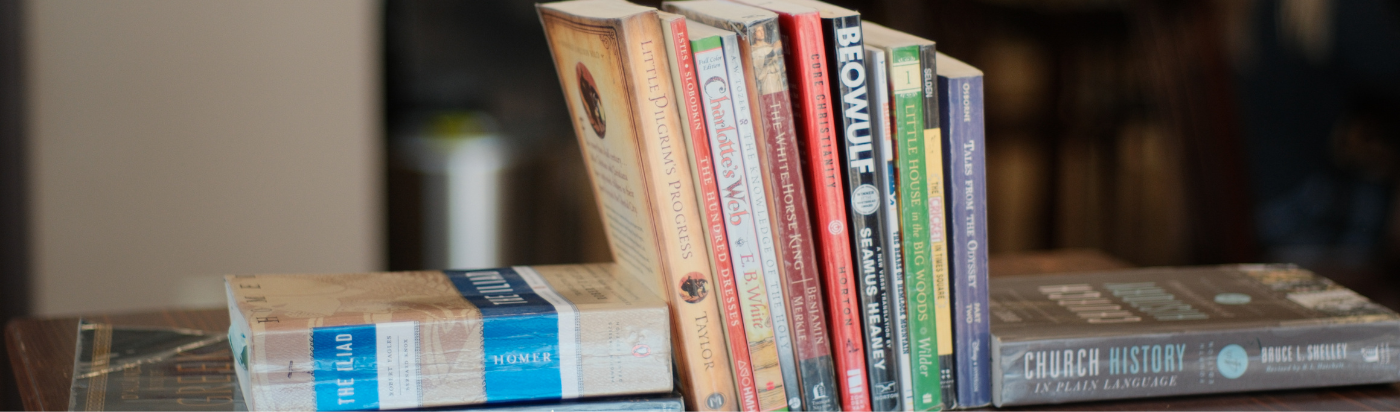
A Christian classical education stands on what time has tested, training your child on enduring truths and inviting him to read the Great Books and primary sources for himself.

A modern education tells your child.

A Christian classical education asks your child.

A modern education will not question your child's unrefined abilities or self-determined interests, inviting your child to sit as judge of truth, beauty, and goodness.

A Christian classical education seeks to elevate your child's knowledge, tastes, and abilities by rightly ordering his affections, calling your child to think deeply about God and his life, to imitate what is excellent, and to grow in humility as he submits himself to Truth, Beauty, and Goodness.

A modern education trains your child for the temporary: measuring your child's success in life by events such as college, career, money, and self-fulfillment.

A Christian classical education aims at the eternal: to form your child into a godly man or woman who speaks well, loves what is true, and follows Christ in all his days.

“A pupil from whom nothing is ever demanded which he cannot do, never does all he can.” 

John Stuart Mill, The Classic Autobiography


Read More About Classical Education